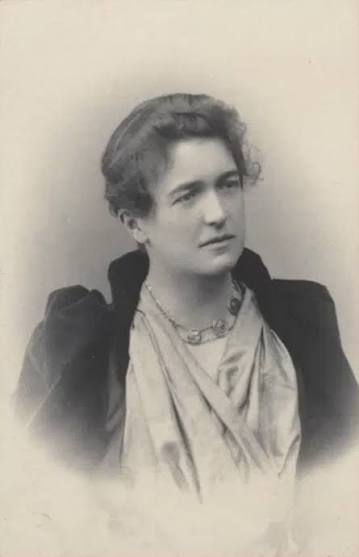
 Ellen Wordsworth Darwin (née Crofts; January 13, 1856 – August 28, 1903) was a British academic, lecturer in English Literature, and a central figure in higher education
circles in late 19th-century Cambridge.
Ellen Wordsworth Darwin (née Crofts; January 13, 1856 – August 28, 1903) was a British academic, lecturer in English Literature, and a central figure in higher education
circles in late 19th-century Cambridge.Queer Places:
University of Cambridge, 4 Mill Ln, Cambridge CB2 1RZ
St Andrew Churchyard, Cambridge Rd, Girton, Cambridge CB3 0PN, United Kingdom
Ellen Wordsworth Darwin (née Crofts; January 13, 1856 – August 28, 1903) was a British academic, lecturer in English Literature, and a central figure in higher education
circles in late 19th-century Cambridge.
Born in Leeds, Yorkshire, to John Crofts (a magistrate and worsted manufacturer) and Ellen Wordsworth, she was a cousin of the philosopher and economist Henry Sidgwick. She entered Newnham College, Cambridge, as a student between 1874 and 1877, during the pioneering early years of women's collegiate education at Cambridge.
Following her studies, Crofts returned to Newnham College as a lecturer and fellow in English Literature from 1878 to 1883. In 1883, she married Sir Francis Darwin, a botanist and son of Charles Darwin. Under the conventional expectations of the era, her marriage meant she had to relinquish her formal academic post, though she continued to teach part-time for a few years.
The couple had a daughter, the poet Frances Cornford, and raised Francis's son from his previous marriage, Bernard Darwin. Known for her strong agnostic views and intellectual rigor, Ellen died prematurely in 1903 at the age of 47.
Ellen Wordsworth Darwin was an active member of the Ladies Dining Society, a private, highly intellectual women's dining and discussion club based in Cambridge.
Founded in November 1890 by author Louise Creighton and women's activist Kathleen Lyttelton, the society consisted of twelve prominent, intellectually engaged women—many of them wives of Cambridge academics or academics themselves.
The group met regularly to discuss politics, university reform, women's suffrage, and higher education. Members were fierce advocates for granting women full degrees at Cambridge and supporting broader professional and civic equality for women.
Alongside Ellen Darwin, the society included notable figures such as Mary Paley Marshall and Maud Darwin.
While Ellen Wordsworth Darwin was heterosexually married and part of conventional academic family structures, her life, friendships, and professional networks intersect closely with prominent figures of the nineteenth-century "New Woman" movement, queer history, and early feminist networks:
One of Ellen's closest and most enduring friendships began during her student days at Newnham College with the legendary classical scholar, linguist, and feminist Jane Ellen Harrison. Harrison is a central figure in queer literary history, known for her lifelong domestic partnerships with other women (such as writer Hope Mirrlees) and her rejection of traditional Victorian gender roles.
Ellen was a close friend and confidante of the brilliant Anglo-Jewish poet, novelist, and essayist Amy Levy. Levy—who moved within radical London and academic circles and maintained deep emotional and social connections with women living "New Woman" lives (including pioneering sapphic figures like Vernon Lee)—modeled elements of a heroine after Ellen Crofts in her writing. In the summer of 1888, Ellen corresponded about Levy visiting her, noting that Levy had written a novel in which "the heroine is partly me".
Through the Ladies Dining Society and her Newnham College background, Ellen was embedded in a network of independent-minded women who intentionally subverted conventional Victorian expectations. Many members and close associates of this broader cohort lived alternative lifestyles, forged primary emotional bonds with other women, and laid the groundwork for modern feminist and queer social networks.
References:
Support this project
This website is a passion project researched, developed, and funded entirely by me. If you find the content valuable and would like to help support the ongoing research and hosting costs, any contribution is deeply appreciated.
Thank you for keeping this independent resource alive!
My books on Amazon: Elisa Rolle's books